The Kalungwishi hydro project could present us all and the local fish-dependent population with another Livingstone Nat Park 'development' fait accompli........a 160MW hydro project intending to take out a 140m head of the Kalungwishi River water (including the three huge waterfalls; Chimpempe, Kabwelume & Lumangwe) and the surrounding relatively unspoilt environment is huge and of likely huge impact - this not just in ecology & environment terms, but also in terms of the survival of the (alarmingly fast-growing) populations of people along this river. All for electricity which we don't need for Zambia (which the local populations will not get and couldn't afford even if they did) but which will be nice and profitable to export.
What regard is given to just how important such natural resources are - and how profitable they could be if protected and used sustainably for Zambia and her people's long term good?
There seems to be an incredible ignorance as to just how close the rural populations are directly dependent on the fragile natural environment - their shelter; their food; their water; everything.
How many jobs will the hydro project produce? How many livelihoods will it destroy or change for the bad?
The Kafue Pollution & Dead Fish Population incident - as usual the reported ECZ response to the Kafue pollution incident(s) is to say the least weak (which is what you would call it if you're exceptionally polite). The latest from the farmers in that area is that the ECZ now reports to them that it could have been caused by a tanker that leaked acid when on a bridge.
So the ECZ's reported opinions and findings change by the week:
*First, the "initial findings" were that it was nothing to do with mining pollution;
*Then, it was mining pollution;
*Now, it was a tanker spilling acid from a bridge.
What next? - probably nothing conclusive while we let the culprits off the hook with the excuse that "we are suffering from the legacy of the past".
==================
PS - one widespread feature of Zambia's share of the Congo Basin system of rivers in Luapula & N provinces is that the mosquito nets issued free by certain donor organisations and intended to 'save children's lives', are going straight to the rivers to end the fish populations lives, which of course in turn will end the children's lives...........
=============================
PPS - have you heard about the "tourist development" of the Zambezi Source?? It has been completely Nat Heritage Conservation "Commissioned" into a complete tourist joke.
=========================================
PPPS - at 1.5MW (initially 0.75MW), the hydro scheme on the upper Zambezi at Kaleni Hill again is very many times what's needed for the mission station and for little Ikelenge town. It's also too much for the beautiful Zambezi Rapids stretch of the river, which will be a gonner very soon.
===========================
COPIES OF PRESS REPORTS
Govt shortlists 2 companies for Kalungwishi power station development
By Kabanda Chulu
Thursday August 17, 2006
GOVERNMENT has shortlisted two companies for the development of the proposed
160-mega watts Kalungwishi Hydro Electric Power station in Northern Province.
Office of the Promotion of Private Power Investments (OPPPI) director John
Wright said Olympic Milling in association with Lunzuwa Hydro Corporation
and Lunsemfwa Hydro Power Company would be invited to submit their proposals
relating to the development of the power project.
"Government has decided to concession the development of Kalungwishi power
station by inviting the private sector and two companies have been
shortlisted for the same project," Wright said.
"The Ministry has just completed designing the framework and will through
the national tender board formally invite these two firms to submit their
proposals that will be evaluated and negotiations will be commenced with the
successful bidder who will be given the concessional rights to develop the
project."
Wright said when the Kalungwishi project is fully developed and becomes
operational, transmission lines would be constructed to link the
Zambia-Tanzania-Kenya interconnection at Kasama.
"There is potential to produce 160 mega watts at Kalungwishi and after its
completion, there will also be provision to construct power transmission
lines (250 kilometres) that will link at Kasama to join the interconnector
regional project," said Wright.
Studies for the development of hydro electric power on Kalungwishi River was
earlier carried out by Legger, Waster Meyer, Piesold and Uhlmann Consultants
in 1973.
It was envisaged then that it was feasible to provide a power station, which
would utilise the confluence of Lumangwe, Kabwelume and Chimpempe falls that
is 140 metres deep.
-----------------------
Kafue river indicates mine waste - ECZ
By Carol Jilombo
Saturday August 19, 2006
ENVIRONMENTAL Council of Zambia (ECZ) manager-inspectorate Patson Zulu has
revealed that samples taken from the Kafue River indicate mine water waste.
Last week, fish of various sizes were found dead or dying in the Kafue River
due to suspected chemical poisoning.
To this effect, ECZ had warned the public against consuming water or dead
fish from the Kafue River.
Zulu said the fish died from mine effluent, which had caused the pollution.
Zulu said ECZ was already on the ground sorting out the problem.
"We have already asked the mines within the vicinity to show us their
operation and production books so that we can ascertain the activities they
engaged in during the period the fish were dying," said Zulu.
And ECZ director Edward Zulu on Thursday said the mines were the major
pollutants of rivers.
Konkola Copper Mines (KCM) was earlier this year given up to December 31 by
ECZ to comply with pollution control regulations.
"KCM has a waste disposal site but the pollution control dam in Chingola is
full and that is the biggest polluting factor at the moment. It requires a
redesign of the entire system," he said.
Zulu acknowledged that the smelters on the Copperbelt were old and designed
at a time when there was no environmental concern.
"We are suffering from the legacy of the past but pollution is something we
have to manage," said Zulu.
Rolf Shenton
Saturday, September 02, 2006


Tuesday, August 22, 2006
Zambia: Biodiversity is Under Threat, Says Mulele
The Post (Lusaka)
August 21, 2006
Posted to the web August 21, 2006
Carol Jilombo
Lusaka
BIODIVERSITY in Zambia is under threat from habitat destruction and Invasive Alien Species (IAS), Ministry of Tourism Permanent Secretary Russell Mulele has said.
During the launch of the UNEP/GEF IAS project on removing barriers to invasive plant management in Africa in Lusaka, Mulele said it was common knowledge that invasive alien species had continued to pose threats to biodiversity, the environment and associated economic activities in Zambia.
Invasive Alien Species (IAS) are species that are foreign to the eco-system under consideration and whose introduction causes or is likely to cause economic or environmental harm.
The species can also cause harm to human health.
"Current levels and trends of encroachment by invasive species are worrying and the situation has resulted in calls for drastic and concerted efforts before the situation deteriorates," Mulele said. He said Zambia had not been spared from the invasion of plant invasive species that caused social, economic and biological problems in the national economy.
"For example, in 1998 we declared the Kafue weed (Water hyacinth) as a national disaster," Mulele said.
He said efforts put in place to manage the threats posed by the invasive plants had not yielded the desired results because the problem still persisted and the rate at which it was spreading was a source of worry to the nation.
"Despite control efforts by various stakeholders, the weeds have spread and continued to grow profusely in most rivers and Wetlands, thus highlighting the need to intensify monitoring, mitigation and management measures," he said.
Mulele said the aim of the project was to reduce or remove barriers to the management of invasive plant species through effective implementation of Article 8(h) of the Convention on Biological Diversity in the four pilot projects of Ethiopia, Ghana, Uganda and Zambia. Article 8(h) states that parties are required to put in place conservation measures and as far as possible and as appropriate to prevent the introduction of, control or eradicate alien species, which threaten ecosystems, habitats or species.
Mulele said the project would address issues that had hindered effective management of invasive alien species in Zambia.
"These are a weak and fragmented policy and institutional framework, lack of information, slow implementation of invasive alien species prevention and control plus lack of capacity for sustainable invasive alien species management," he said.
Mulele said the barriers were translated into four project components, the successful implementation of which would save the nation millions of kwacha in controlling the invasive species.'
The Global Environmental Facility (GEP) through the United Nations Environment Programme (UNEP) funds the project while the government will meet the co-financing part.
August 21, 2006
Posted to the web August 21, 2006
Carol Jilombo
Lusaka
BIODIVERSITY in Zambia is under threat from habitat destruction and Invasive Alien Species (IAS), Ministry of Tourism Permanent Secretary Russell Mulele has said.
During the launch of the UNEP/GEF IAS project on removing barriers to invasive plant management in Africa in Lusaka, Mulele said it was common knowledge that invasive alien species had continued to pose threats to biodiversity, the environment and associated economic activities in Zambia.
Invasive Alien Species (IAS) are species that are foreign to the eco-system under consideration and whose introduction causes or is likely to cause economic or environmental harm.
The species can also cause harm to human health.
"Current levels and trends of encroachment by invasive species are worrying and the situation has resulted in calls for drastic and concerted efforts before the situation deteriorates," Mulele said. He said Zambia had not been spared from the invasion of plant invasive species that caused social, economic and biological problems in the national economy.
"For example, in 1998 we declared the Kafue weed (Water hyacinth) as a national disaster," Mulele said.
He said efforts put in place to manage the threats posed by the invasive plants had not yielded the desired results because the problem still persisted and the rate at which it was spreading was a source of worry to the nation.
"Despite control efforts by various stakeholders, the weeds have spread and continued to grow profusely in most rivers and Wetlands, thus highlighting the need to intensify monitoring, mitigation and management measures," he said.
Mulele said the aim of the project was to reduce or remove barriers to the management of invasive plant species through effective implementation of Article 8(h) of the Convention on Biological Diversity in the four pilot projects of Ethiopia, Ghana, Uganda and Zambia. Article 8(h) states that parties are required to put in place conservation measures and as far as possible and as appropriate to prevent the introduction of, control or eradicate alien species, which threaten ecosystems, habitats or species.
Mulele said the project would address issues that had hindered effective management of invasive alien species in Zambia.
"These are a weak and fragmented policy and institutional framework, lack of information, slow implementation of invasive alien species prevention and control plus lack of capacity for sustainable invasive alien species management," he said.
Mulele said the barriers were translated into four project components, the successful implementation of which would save the nation millions of kwacha in controlling the invasive species.'
The Global Environmental Facility (GEP) through the United Nations Environment Programme (UNEP) funds the project while the government will meet the co-financing part.
Thursday, August 03, 2006
Chinese and Chipata Chipper
The Chinese want hardwood for export and sleepers for a new railway line between Chipata and Malawi.They want 3000 trees in Nsefu, 3000 in Kakumbi and 21,000 in Nsefu. It's all illegal. The Chairlady of the MMD in Chipata, Mrs Mbewe is the middle person in Jumbe. She has got the local people to get the licences and cut the trees, though she is paying for them which is illegal as they are supposed to be for local use only. 150 have been cut already and most if not all ferried out on lorries.
The Forestry Officer in Mambwe (Musiwa) is in on it, as is Chief Jumbe. All further licences have been suspended while an investigation goes ahead. ZAWA are dead against it. Cutters have now been forced to apply for a pit saw licence (min 40, max 60 trees a month!). This will give everyone (Forestry, ZAWA, Environmental Council of Zambia and other stakeholders) chance to have their say and it will then be refused or curtailed.
anonymous
The Forestry Officer in Mambwe (Musiwa) is in on it, as is Chief Jumbe. All further licences have been suspended while an investigation goes ahead. ZAWA are dead against it. Cutters have now been forced to apply for a pit saw licence (min 40, max 60 trees a month!). This will give everyone (Forestry, ZAWA, Environmental Council of Zambia and other stakeholders) chance to have their say and it will then be refused or curtailed.
anonymous
Wednesday, August 02, 2006
OCCASIONAL ZAMBIA CONSERVATION BULLETIN, 28 APRIL 2006 (No. 1)
On 10 January, 2006, the Natural Resources Consultative Forum (NRCF) resolved that no elephant sport hunting (ESH) should be conducted in Zambia in 2006. The minutes were widely circulated; no replies were received in support – or answers to my queries, from elephant conservationists, CITES or the US Fish & Wildlife Service, though the Biodiversity Convention Secretariat replied that they had no real powers over signatories
An advisory note - and the minutes of the NRCF ESH meeting, were sent by the NRCF to the Ministry of Tourism, Environment and Natural Resources (MTENR), followed by a meeting between the NRCF Chairman and the Minister. No reply to the advisory note was received from the Minister.
On 11 April 2006 at the Zambia Wildlife Authority (ZAWA) offices, an auction took place for 10 of the 20 elephant for sport hunting (the other 10 being taken up by the concessionaries where they had been made available)
Subsequent efforts to hold meetings of the full cross-sectoral NRCF to discuss policy and legislative issues affecting natural resources and environment have not been successful since January. Matters requiring attention include: the proposed Livingstone lion park and breeding project which has been approved by ZAWA anf for which no EIA was called for; regulations on Game Management Areas (GMAs), game ranching and captive breeding and national parks; tourism leases, wildlife harvesting quotas and the rationalization of hunting concessions, the impact of wildlife on customary and statutory landowners, the implementation of the National Policy on the Environment, feedback on joint forest management, national park public private partnerships, community natural resource management empowerment; UNDP/GEF programme on protected areas – and the state of the pilot projects in Bangweulu and Lower Zambezi; the World Bank SEED programme; the Bangweulu Ramsar site, its management and need for greater protection...
A case is currently before the High Court regarding the sale of part of the West Mvuvye National Forest No. 54 by Chieftainess Mwape to a businessman. A 99 year renewable lease was issued, signed only by the Commissioner of Lands – although, for areas in excess of 250 ha, it is required that the Minister of Lands signs. The plaintiff is the brother of Chieftainess Mwape and Senior Chief Luembe. The Forestry Department appear disinclined to act. There are other similar cases where national forest has been alienated.
The proposed sale of land greater than 250 ha by Chief Nyalugwe to a businessman was refused by the Nyimba District Council and by the Lands Minister
Senior Chief Luembe, removed as chief by the community and local government, has been re-instated – although he has yet to receive the return of his official stamp. He had been removed partly due to the dissatisfaction of the Community and the CRB for selling off a large area of land to a Petauke businessman behind the backs of the Luembe Trust – a trust of which I am co-director. This sale was not approved.
The Zambian Government - through the Ministry of Lands, is reviewing the draft land Policy. The World Bank is assisting them in finalising the review process. Recently the World Bank consulted a number of stakeholders on land policy related issues and have drafted an action plan for finalising the Land Policy, this draft action plan was presented to some 12 or so participants on Wednesday 12th April 2006. I attended part of the meeting. The draft plan – to be handed in to the Ministry on 13 April, had concluded that in future all land in Zambia fall under the control of the Ministry, with chiefs acting as ‘land administrators’ – a report which clearly had concluded that customary usufruct and tenure, and the chiefs, were obstructing Zambia’s progress. On my objecting to their obviously limited consultations and on the revolution they were suggesting, the consultants said they had been constrained by the list of people and organizations supplied by the Ministry of Lands, and had therefore not consulted the NRCF, the Royal House of Chiefs, Local Communities, the private sector and civil society. The WB representative at the meeting said that they would have to now introduce this essential further step in the process. The Land Alliance needs to monitor this.
From 19 – 21 April, the Environmental Investigation Agency (UK) held an International Ivory Enforcement Training Workshop in Lusaka funded by DFID. Rolf Shenton, Dave Cummings and I, plus the Nyalugwe CRB Secretary and a Luembe community member Mbeza Safaris is funding at NIPA taking the course on legal prosecutions. A presentation on the Singapore ivory seizure was made (2002) in which the details of the shipment of 6.5 tons of ivory – suspected to come mostly from the Luangwa valley in Zambia, sent from Lilongwe, via Durban, to Singapore, was made. DNA investigations of the ivory and soil isotope analysis so far reveals that the elephant come from two savanah populations. These now need to be matched with samples from Luangwa and elsewhere. While presenting his part in the investigation, Samuel Ngosi of the Malawian Anti-Corruption Bureau revealed – possibly for the first time, that his investigations had uncovered the fact that a total of 19 shipments had been made by the same people, using the same methods and carriers, between 1994 and 2002 – a total of 123.5 tons of ivory being shipped, much of it small worked pieces. No arrests or prosecutions have as yet been made. Some of this ivory might be hippo ivory (see TRAFFIC reports on the swing to hippo ivory), given that a recent survey I made of over 300 hippo in the lower Luangwa could find only one alpha male. In addition, in the nearby Lukushashi and Lunsemfwa rivers, most of the hippo have been poached.
Elephant continue to be poached in the Zambezi valley – one last week; and a village scout in Nyalugwe’s country in the south Luangwa, who had poached an elephant last year, is still on the run.
The recent elections held for the Luembe Community Resource Board have been nullified as a result of a boycott of the election by the residents of the Luembe section of the West Petauke Game Management Area, who – as the designated local community partners in the hunting lease agreement, felt that they should hold a majority Board representation. A new election has been held, the same chairmen re-elected, as well as a representative of all the Village Area Groups (VAGs).
Meetings have been held with the Disaster Management Unit (DMU) in the office of the Vice-President to determine why food relief has not been forthcoming for some communities in the West Petauke GMA hard hit by animal damage and flooding of villages and cropland. The investigation revealed that money had been issued to agents (ARDRA) in January, but that they had not yet delivered. Promises were made that the army would deliver food soon. In addition, promises made to communities by the DMU and ZAWA in March of 2005 (to empower specified community members and professional hunters to undertake crop protection) have not been forthcoming
Some professional hunters are currently assisting the Director of Conservation in ZAWA, Dr Lewis Saiwana, in the training of crop and human protection guards, with guidelines provided by Barry Shenton, former senior warden and veteran of the elephant control group in the Department of National Parks & Wildlife, a group established in the 1930s. In addition, the legendary control guard and hunter, Rice Time, will be called on to offer his sage advice.
In The Post newspaper of Friday 21 April, a letter marked SECRET was printed which had been copied to the Secretary General of the Patriotic Front Party by the Zambia President’s Principal Private Secretary, and which had been addressed to myself and three other people, stating that the President was in receipt of information that we were working against his MMD Party, and that – amongst other things, we had agreed to create artificial food shortages in Zambia by buying-up and destroying maize. The Post editorial of 22 April strongly condemned State House for the letter. The President was out of the country at the time. Three of the named people are safari operators. The allegations made are patently false. On 27 April, one of the accused was visited by security police. He was told that we had all been cleared and that an apology would be forthcoming. However, the rather sorry saga is further evidence of some rather sinister forces at work within the Zambian wildlife and tourism industry.
An advisory note - and the minutes of the NRCF ESH meeting, were sent by the NRCF to the Ministry of Tourism, Environment and Natural Resources (MTENR), followed by a meeting between the NRCF Chairman and the Minister. No reply to the advisory note was received from the Minister.
On 11 April 2006 at the Zambia Wildlife Authority (ZAWA) offices, an auction took place for 10 of the 20 elephant for sport hunting (the other 10 being taken up by the concessionaries where they had been made available)
Subsequent efforts to hold meetings of the full cross-sectoral NRCF to discuss policy and legislative issues affecting natural resources and environment have not been successful since January. Matters requiring attention include: the proposed Livingstone lion park and breeding project which has been approved by ZAWA anf for which no EIA was called for; regulations on Game Management Areas (GMAs), game ranching and captive breeding and national parks; tourism leases, wildlife harvesting quotas and the rationalization of hunting concessions, the impact of wildlife on customary and statutory landowners, the implementation of the National Policy on the Environment, feedback on joint forest management, national park public private partnerships, community natural resource management empowerment; UNDP/GEF programme on protected areas – and the state of the pilot projects in Bangweulu and Lower Zambezi; the World Bank SEED programme; the Bangweulu Ramsar site, its management and need for greater protection...
A case is currently before the High Court regarding the sale of part of the West Mvuvye National Forest No. 54 by Chieftainess Mwape to a businessman. A 99 year renewable lease was issued, signed only by the Commissioner of Lands – although, for areas in excess of 250 ha, it is required that the Minister of Lands signs. The plaintiff is the brother of Chieftainess Mwape and Senior Chief Luembe. The Forestry Department appear disinclined to act. There are other similar cases where national forest has been alienated.
The proposed sale of land greater than 250 ha by Chief Nyalugwe to a businessman was refused by the Nyimba District Council and by the Lands Minister
Senior Chief Luembe, removed as chief by the community and local government, has been re-instated – although he has yet to receive the return of his official stamp. He had been removed partly due to the dissatisfaction of the Community and the CRB for selling off a large area of land to a Petauke businessman behind the backs of the Luembe Trust – a trust of which I am co-director. This sale was not approved.
The Zambian Government - through the Ministry of Lands, is reviewing the draft land Policy. The World Bank is assisting them in finalising the review process. Recently the World Bank consulted a number of stakeholders on land policy related issues and have drafted an action plan for finalising the Land Policy, this draft action plan was presented to some 12 or so participants on Wednesday 12th April 2006. I attended part of the meeting. The draft plan – to be handed in to the Ministry on 13 April, had concluded that in future all land in Zambia fall under the control of the Ministry, with chiefs acting as ‘land administrators’ – a report which clearly had concluded that customary usufruct and tenure, and the chiefs, were obstructing Zambia’s progress. On my objecting to their obviously limited consultations and on the revolution they were suggesting, the consultants said they had been constrained by the list of people and organizations supplied by the Ministry of Lands, and had therefore not consulted the NRCF, the Royal House of Chiefs, Local Communities, the private sector and civil society. The WB representative at the meeting said that they would have to now introduce this essential further step in the process. The Land Alliance needs to monitor this.
From 19 – 21 April, the Environmental Investigation Agency (UK) held an International Ivory Enforcement Training Workshop in Lusaka funded by DFID. Rolf Shenton, Dave Cummings and I, plus the Nyalugwe CRB Secretary and a Luembe community member Mbeza Safaris is funding at NIPA taking the course on legal prosecutions. A presentation on the Singapore ivory seizure was made (2002) in which the details of the shipment of 6.5 tons of ivory – suspected to come mostly from the Luangwa valley in Zambia, sent from Lilongwe, via Durban, to Singapore, was made. DNA investigations of the ivory and soil isotope analysis so far reveals that the elephant come from two savanah populations. These now need to be matched with samples from Luangwa and elsewhere. While presenting his part in the investigation, Samuel Ngosi of the Malawian Anti-Corruption Bureau revealed – possibly for the first time, that his investigations had uncovered the fact that a total of 19 shipments had been made by the same people, using the same methods and carriers, between 1994 and 2002 – a total of 123.5 tons of ivory being shipped, much of it small worked pieces. No arrests or prosecutions have as yet been made. Some of this ivory might be hippo ivory (see TRAFFIC reports on the swing to hippo ivory), given that a recent survey I made of over 300 hippo in the lower Luangwa could find only one alpha male. In addition, in the nearby Lukushashi and Lunsemfwa rivers, most of the hippo have been poached.
Elephant continue to be poached in the Zambezi valley – one last week; and a village scout in Nyalugwe’s country in the south Luangwa, who had poached an elephant last year, is still on the run.
The recent elections held for the Luembe Community Resource Board have been nullified as a result of a boycott of the election by the residents of the Luembe section of the West Petauke Game Management Area, who – as the designated local community partners in the hunting lease agreement, felt that they should hold a majority Board representation. A new election has been held, the same chairmen re-elected, as well as a representative of all the Village Area Groups (VAGs).
Meetings have been held with the Disaster Management Unit (DMU) in the office of the Vice-President to determine why food relief has not been forthcoming for some communities in the West Petauke GMA hard hit by animal damage and flooding of villages and cropland. The investigation revealed that money had been issued to agents (ARDRA) in January, but that they had not yet delivered. Promises were made that the army would deliver food soon. In addition, promises made to communities by the DMU and ZAWA in March of 2005 (to empower specified community members and professional hunters to undertake crop protection) have not been forthcoming
Some professional hunters are currently assisting the Director of Conservation in ZAWA, Dr Lewis Saiwana, in the training of crop and human protection guards, with guidelines provided by Barry Shenton, former senior warden and veteran of the elephant control group in the Department of National Parks & Wildlife, a group established in the 1930s. In addition, the legendary control guard and hunter, Rice Time, will be called on to offer his sage advice.
In The Post newspaper of Friday 21 April, a letter marked SECRET was printed which had been copied to the Secretary General of the Patriotic Front Party by the Zambia President’s Principal Private Secretary, and which had been addressed to myself and three other people, stating that the President was in receipt of information that we were working against his MMD Party, and that – amongst other things, we had agreed to create artificial food shortages in Zambia by buying-up and destroying maize. The Post editorial of 22 April strongly condemned State House for the letter. The President was out of the country at the time. Three of the named people are safari operators. The allegations made are patently false. On 27 April, one of the accused was visited by security police. He was told that we had all been cleared and that an apology would be forthcoming. However, the rather sorry saga is further evidence of some rather sinister forces at work within the Zambian wildlife and tourism industry.
TOAZ ADVISES MINISTRY ON NATURAL RESOURCE MANAGEMENT
THE POST NEWSPAPER (TUESDAY, AUGUST 1 2006)
TOAZ ADVISES MINISTRY ON NATURAL RESOURCE MANAGEMENT
Joan Chirwa and Florence Bupe
TOUR Operators Association of Zambia (TOAZ) has advised the Ministry of Tourism, Environment and Natural Resources to concentrate on sustainable management of natural resources and not its business component. Association chairperson, Rolf Shenton said in countries where money was hard to find, natural resource management was always treated as a trivial concern compared to making money. Shenton said appropriate management of natural resources was being hindered by double responsibilities that the Ministry of Tourism and Environment was given. He said the Zambia Wildlife Authority (ZAWA) and the Department of Tourism were always in conflict, regarding issues of natural resource management and reserving money for tourism. Shenton noted that problems of wildlife conservation by ZAWA were as a result of limited funding to the authority, which ended up granting hunting licenses to individuals once it ran out of finances.
"In principle, I would like to see the whole ministry of tourism rationalised so that it deals with natural resource management and that the business issues from tourism are dealt with by the Ministry of Commerce as in any other business sector," Shenton said. ""The Natural Resources Consultative Forum is the ideal place to deal with cross-sectoral issues. Whilst we mix business and conservation we will always compromise sustainable use of resources. We will continue eating chicken instead of feeding it and sharing the eggs. Very Soon we will all be standing around in poverty with no natural resources to manage. The same argument applies with ZAWA which must become a small, muscular regulatory body that we can trust to control exploitation of wildlife resources in a sustainable manner, not one that leads the harvest because they need more money."
TOAZ ADVISES MINISTRY ON NATURAL RESOURCE MANAGEMENT
Joan Chirwa and Florence Bupe
TOUR Operators Association of Zambia (TOAZ) has advised the Ministry of Tourism, Environment and Natural Resources to concentrate on sustainable management of natural resources and not its business component. Association chairperson, Rolf Shenton said in countries where money was hard to find, natural resource management was always treated as a trivial concern compared to making money. Shenton said appropriate management of natural resources was being hindered by double responsibilities that the Ministry of Tourism and Environment was given. He said the Zambia Wildlife Authority (ZAWA) and the Department of Tourism were always in conflict, regarding issues of natural resource management and reserving money for tourism. Shenton noted that problems of wildlife conservation by ZAWA were as a result of limited funding to the authority, which ended up granting hunting licenses to individuals once it ran out of finances.
"In principle, I would like to see the whole ministry of tourism rationalised so that it deals with natural resource management and that the business issues from tourism are dealt with by the Ministry of Commerce as in any other business sector," Shenton said. ""The Natural Resources Consultative Forum is the ideal place to deal with cross-sectoral issues. Whilst we mix business and conservation we will always compromise sustainable use of resources. We will continue eating chicken instead of feeding it and sharing the eggs. Very Soon we will all be standing around in poverty with no natural resources to manage. The same argument applies with ZAWA which must become a small, muscular regulatory body that we can trust to control exploitation of wildlife resources in a sustainable manner, not one that leads the harvest because they need more money."
Tuesday, August 01, 2006
Customary land and signs of light!
At the Fifth National Development Plan (FNDP) Stakeholder's meeting in Lusaka, chiefs' representative, James Matale, said that chiefs should be allowed to retain absolute title to their land, while giving investors and non-subjects renewable lease rights under various chiefdom trusts, and that " the land leased for commercial use should attract royalites and fees which will form part of the income and resources for financing adminstration and development projects in their areas." This is the first public statement revealing that the chiefs have studied the Landsafe Trust Investment Model for customary and protected areas, which I had given to the House of Chiefs a year ago, and that they see it as a way forward for attracting investment, but without alienating the land.
However, what chiefs have to remember is that - with the exception of Barotse, it is the headmen - chaired by the chief, who are the custodians of land - all land ownership being vested in the President. Total authority over land cannot be exercised by chiefs alone as they will continue alienating it against the wishes of their headmen and subjects. And non-subjects (Zambians) should not have to make lease payments for land used in the traditional subsistence sense.
However, what chiefs have to remember is that - with the exception of Barotse, it is the headmen - chaired by the chief, who are the custodians of land - all land ownership being vested in the President. Total authority over land cannot be exercised by chiefs alone as they will continue alienating it against the wishes of their headmen and subjects. And non-subjects (Zambians) should not have to make lease payments for land used in the traditional subsistence sense.
The Natural Resources Ship of Zambia
THE Law Association of Zambia (LAZ) recently stated that after the dissolution of the National Assembly the Vice-President, Cabinet ministers, provincial deputy ministers and deputy ministers should - in accordance with Article 45(2), 46(2) and 47(3) of the Constitution of Zambia, cease to perform their respective functions. Given that the Zambian Wildlife Authority (ZAWA) Board is currently dissolved, and that the Minister of Tourism, Environment and Natural Resources (MTENR) is responsible for appointing its members, a new ZAWA Board may not be appointed until after the election on 28 September 2006. Thus ZAWA is left without a Board to control its actions, and without a Minister to give regulations and statutory instruments effect.
Monday, July 31, 2006
VICE-PRESIDENT LAYS LEGACY FOUNDATION STONE
On Saturday 29 July 2006, Vice-President Lupando Mwape laid the foundation stone of the Legacy Holdings, Mosi-oa-Tunya Hotel and Golf Estate development in the World Heritage Site in Livingstone, saying “The planned provision of permanent jobs by this Legacy Holdings project is really commendable because this sector is reported to be riddled with vices of casualisation and payment of slavery wages. Government will not hesitate to deal firmly with any investor found practicing this form of abuse and exploitation of the Zambia people. Those who have been hero-worshipped somewhere else based on misdirected superiority complex will not be worshipped in Livingstone and the country in general and I therefore direct Haakayobe (PS) to submit a report on these culprits within seven days so that government puts a stop to these managers’ honeymoon”.
He said the proposed project has been allocated 200 hectares of the national park.
He said the proposed project has been allocated 200 hectares of the national park.
Sunday, July 30, 2006
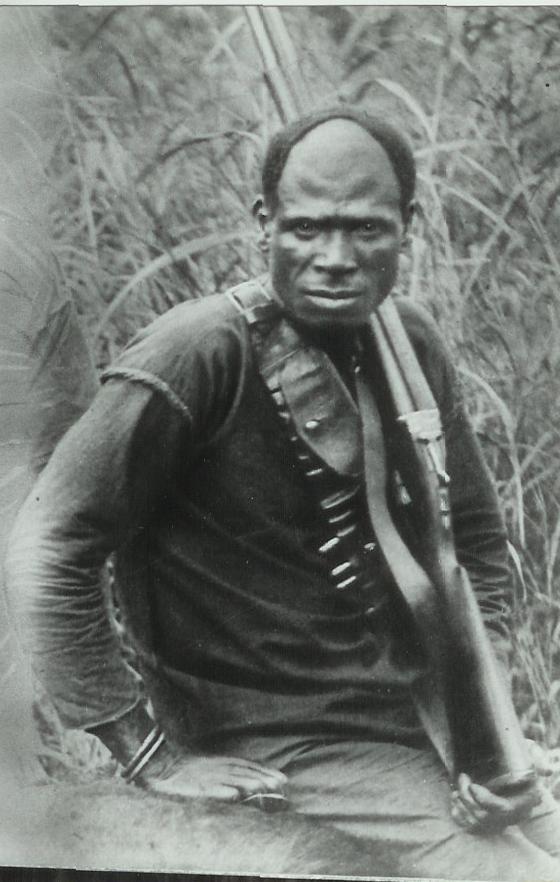
Chumamaboko
CHUMAMABOKO, FIRST OF THE CENTRAL AFRICAN PROFESSIONAL HUNTERS?
At the time that F. H. Melland - a nephew of Prime Minister Asquith, arrived in 1901 on foot at Mpika in order to take up his post with the British South Africa Company as Assistant Native Collector, Chumamaboko (arms of iron) had for some time been a leading member of the elite elephant hunting, achiwinda clan. Famous in that part of the world for his hunting prowess, he soon attracted the attention of Melland who wanted to spend as much time as possible on his favourite pastime, hunting. They were to stay together until Chuma’s death shortly before Melland’s departure for England in 1924 when North-Eastern and North-Western Rhodesia were removed from BSA Company control and became Northern Rhodesia, administered by the Imperial Government.
Chuma became Melland’s professional hunter at the same time that the pioneer professional white hunters, the Hill brothers, Clifford and Harold, began conducting lion hunting parties on their ranch in the Machakos area of Kenya. Arguably therefore, Chuma was the first professional hunter in what now constitutes Zambia.
While at Mpika until about 1912, he guided Melland all around the district, venturing far into the Bangweulu swamps and the nearby Luangwa Valley. On the Luitikila river, which has its headwaters near Mpika, they shot a 116 pounder which today can be seen in the Thring Museum in England, one of the biggest elephant ever taken in Zambia, the record being a 136 pounder with one tusk.
Chuma followed Melland from Mpika to Solwezi, thence to Kasempa, Kafue and finally, to Mazabuka. And all the time they hunted together.
Melland wrote three books, one on elephant hunting, one on the anthropology of the Kaonde in Kasempa district, and one recounting his journey with Chuma and a friend from Bangweulu to Cairo, hunting elephant on the way. There are a number of fish named after Melland as a result of his Bangweulu fish collections, and he made valuable contributions in anthropology and on African development. His friends were people like Mickey Norton, perhaps the greatest of all elephant hunters, and J.E. Hughes who operated the first professionally conducted safaris in the Bangweulu and whose classic book, ‘Eighteen Years in the Bangweulu’ is still much in demand.
Chuma was remarkable in every way: Melland recounts the tale of how Chuma, a man revered by his fellow Zambians, once personally cleaned up the latrines in the labour lines at Kasempa during an outbreak of dysentery, hubris being absent from his character.
The picture of Chuma was given to me by Melland’s eldest daughter, Amicia, in 1998, a remarkable woman who worked for many years in Chile. F.H. was killed at the outbreak of war in 1939 when he fell between the train and the platform. He had just been appointed Secretary to the Royal Africa Society.
At the time that F. H. Melland - a nephew of Prime Minister Asquith, arrived in 1901 on foot at Mpika in order to take up his post with the British South Africa Company as Assistant Native Collector, Chumamaboko (arms of iron) had for some time been a leading member of the elite elephant hunting, achiwinda clan. Famous in that part of the world for his hunting prowess, he soon attracted the attention of Melland who wanted to spend as much time as possible on his favourite pastime, hunting. They were to stay together until Chuma’s death shortly before Melland’s departure for England in 1924 when North-Eastern and North-Western Rhodesia were removed from BSA Company control and became Northern Rhodesia, administered by the Imperial Government.
Chuma became Melland’s professional hunter at the same time that the pioneer professional white hunters, the Hill brothers, Clifford and Harold, began conducting lion hunting parties on their ranch in the Machakos area of Kenya. Arguably therefore, Chuma was the first professional hunter in what now constitutes Zambia.
While at Mpika until about 1912, he guided Melland all around the district, venturing far into the Bangweulu swamps and the nearby Luangwa Valley. On the Luitikila river, which has its headwaters near Mpika, they shot a 116 pounder which today can be seen in the Thring Museum in England, one of the biggest elephant ever taken in Zambia, the record being a 136 pounder with one tusk.
Chuma followed Melland from Mpika to Solwezi, thence to Kasempa, Kafue and finally, to Mazabuka. And all the time they hunted together.
Melland wrote three books, one on elephant hunting, one on the anthropology of the Kaonde in Kasempa district, and one recounting his journey with Chuma and a friend from Bangweulu to Cairo, hunting elephant on the way. There are a number of fish named after Melland as a result of his Bangweulu fish collections, and he made valuable contributions in anthropology and on African development. His friends were people like Mickey Norton, perhaps the greatest of all elephant hunters, and J.E. Hughes who operated the first professionally conducted safaris in the Bangweulu and whose classic book, ‘Eighteen Years in the Bangweulu’ is still much in demand.
Chuma was remarkable in every way: Melland recounts the tale of how Chuma, a man revered by his fellow Zambians, once personally cleaned up the latrines in the labour lines at Kasempa during an outbreak of dysentery, hubris being absent from his character.
The picture of Chuma was given to me by Melland’s eldest daughter, Amicia, in 1998, a remarkable woman who worked for many years in Chile. F.H. was killed at the outbreak of war in 1939 when he fell between the train and the platform. He had just been appointed Secretary to the Royal Africa Society.
LANDSAFE INVESTMENT TRUSTS
LANDSAFE INVESTMENT TRUSTS FOR CUSTOMARY LAND AND PROTECTED AREAS OF ZAMBIA
-A PRELIMINARY GUIDE PREPARED FOR CUSTOMARY LEADERS, GOVERNMENT AND COMMUNITY RESOURCE BOARDS -
WHAT IS A LANDSAFE INVESTMENT PARTNERSHIP
A Landsafe investment partnership is made up of the local community and government, investors, and local and international NGOs. It is a sustainable business partnership of equals who share a common goal of integrating community development with that of biodiversity and land conservation. It is investment driven; and it does not take away customary land.
A Landsafe partnership may be registered as a trust company under the Companies Act CAP 388 of the Zambian Laws (limited by guarantee) or under the Land (Perpetual Succession ) Act (Cap. 186 of the Laws of Zambia) - non-profit, having as its trustees the chief (chairman of the headmen), the investor, a representatives of the main partner NGO, the Community Resource Board (dealing with wildlife interests) and the District Council (or a governmental organization in the case of protected areas such as ZAWA and the Forestry Department) in which the programme is being conducted, and other key stakeholders.
WHY DO CHIEFDOMS NEED LANDSAFE DEVELOPMENT?
The chiefdoms cover more than 94% of the land in Zambia and contain a wealth of natural resources. Development has not come to these areas, and the opportunities for attaining food security and the raising of living standards are few in places where villages are scattered, lie far from Government services and from markets, and where crops are preyed upon by wildlife. The Government does not have the money or the capacity to deliver full development, and donor support merely ensures continued dependency on aid. The way forward is to encourage investment, but investment which comes in as a partner of communities, that supports the traditional structures and that does not take away the land.
HOW CAN A LANDSAFE INVESTMENT PARTNERSHIP ASSIST DEVELOPMENT?
Chiefs are empowered under the Lands Act No. 29 of 1995 to dispose of land for up to 99 years on leasehold tenure – provided Government agree. Driven by a need to generate income, chiefs are selling off land, removing it forever from the community. The Landsafe model ensures that land remains in the villagers’s control – except, in exceptional cases, perhaps for small areas needed for high-cost buildings. Chiefdoms also do not own the wildlife of their areas, this resource being held by Government and given out as yearly hunting quotas. In support of Government’s policy of de-centralization and devolution, the Wildlife Act of 1998 offers an opportunity for the community to obtain more powers over its own wildlife resources – one of its main opportunities for raising living standards and for wealth creation, giving as one of its main objectives ‘to facilitate the active participation of local communities in the management of the wildlife estate’. This Act, also allows for the recognition of Community Resource Boards (CRBs), which, representing the Zambia Wildlife Authority (ZAWA), may obtain and make use of game quotas and are responsible for the protection of wildlife and people (from wildlife – the original function of ZAWA’s predecessor organizations). However, CRBs are only empowered under the Wildlife Act, making the formation of Trusts – with responsibility for all natural resources, essential. Landsafe makes use of these two Acts – as well as the proposed Forest Act of 1999 and the National Biodiversity Strategy and Action Plan (NBSAP) – and the recent National Policy on Environment (May 2006), to lay the groundwork for the future development of customary land so as to conserve the biodiversity and, at the same time, to stimulate much needed rural development.
WHAT IS THE ROLE OF LANDSAFE PARTNERS?
• The Customary Authority
The Authority i.e. the chiefs and their headmen, is, along with the investor, the co-director of the Trust responsible for the development of the area, lending to it his traditional powers and those enshrined under the Lands Act, ensuring that secure access to and use of the land is possible, and that the community benefits.
• The Community Resource Board
The CRB, being only empowered under the Wildlife Act, is there to assist in the sustained use of the wildlife resources for the benefit of the community – in particular in taking ownership of game quotas and for deploying and managing village scouts, protectors of the very resource which should be sustainably utilized. It is also the vehicle to serve the community by making applications, where feasible, for wildlife harvesting rights, as allowed under Part 3(3) of the Wildlife Act – a rarely invoked right.
• The Investor/manager
The role of the investor/manager is to provide the seed money to start the project, to recruit other investors, and perhaps to manage the development. For this to happen there has to be an incentive to do so, as well as the necessary protection and security of tenure for the investors. The manager will also have the crucial role of managing a conservation area (a conservancy), one containing scattered communities, and possibly endangered species and protected areas. This is an holistic development requiring experience in wildlife management, biodiversity protection, tourism development, artisanal and commercial agriculture, forest exploitation, community development and small business development.
• The NGOs
The NGOs act as umpires between managers and investors, the customary authority, the community based organizations (CBOs) and Government. They assist the scheme to grow, and lay the groundwork for long-term sustainability. Crucially, they are empowered to carry out community development, identifying projects through participatory rapid rural appraisal, developing project proposals, drawing on money built up in a trust fund, as well as accessing donor funds for micro-level development.
WHAT WILL LANDSAFE INVESTMENT DO IN ZAMBIA?
• It will create a business partnership between the community, Government and investors, expressed in the form of a trust company in which the chiefdom, the investor/manager, NGOs, CBOs and the District Councils are subscribers
• It will allow ‘use and occupancy’ (usufruct) of land – from which it will derive rentals – managed by the trust in a trust fund, to benefit the community and the biodiversity on which it depends
• It will help to empower the CBOs so that they are better able to conserve the natural resources of the chiefdom for the benefit of all concerned
• It will provide for sustainable agricultural and natural resource development
• It will improve livelihoods and, in comparative terms, create wealth
• It will provide food security
• It will provide a framework for sustainable donor involvement
• It will provide a model and framework for the delivery of true rural development, particularly in resource rich areas
• It will not alienate the land
WHAT DO THESE WORDS MEAN?
Biodiversity
Biological diversity (biodiversity): the variations in biological organisms at ecosystem,
species and gene level
Chiefdom
Authority over land held under customary tenure
Landsafe Investment Model
An integrated conservation and development model (symbolized by the traditional
African chair) established within areas of customary tenure and associated protected
areas, and carried out by a partnership between investors, customary authorities and
government, and non-government organizations
Conservancy
A conserved area (not, necessarily, a game ranch)
Customary Area
Land held under customary tenure i.e. Open Areas and Game Management Areas
Customary Authority
The custodian of land held under customary tenure (chiefs and headmen)
Customary Tenure
Land held, through long tradition, by village headmen under the chairmanship of a chief
(Appendix 4 of the Laws of Zambia)
De-centralization
The allocation of responsibilities for decision-making and operations to lower levels of
government, community organizations, private sector, and NGOs
Devolution
The transfer of power from a central to a subordinate level of organization, particularly
from a central government to regional or local governments
Ecosystem
A dynamic complex of plants, animal and micro-organism communities and their non-
living environment interacting as a functional unit
Game
Commonly hunted animal species specified under the Wildlife Act
Holism.
The principle which makes for the origin and progress of wholes in the
universe. It is not only creative but self-creative, and its final structures are far
more holistic than its initial structures
Holistic Management.
The management of the whole
Hunting Concession
An area where authority to hunt within a specified hunting block has been given by ZAWA and the local community, to a company for a specified period of time
Land Alienation
The conversion of land from customary tenure to leasehold tenure: provisionary – 14
years; full title – 99 years (renewable)
Land tenure
The rights of individuals or groups over arable, grazing and residential land, how such
rights are acquired, what they consist of, how they operate in the holding, transfer and
inheritance of land and how they may be extinguished
Local Community
The resident ‘owners’ of customary land - including GMAs, other than owners of tourist and camp lodges or hunting concessions – who by virtue of their rights over land, invest in and should derive benefits from the sustainable utilization of the natural resources in their area; or as defined by ZAWA in the 2003 Safari Lease Agreement as ‘The total number of villages, their residents and traditional rulers within a Game Management Area
Natural Resources
Land and its biological resources: the soils, vegetation and the fauna
Open Areas
Customary land not included in GMAs
Partner
One who shares risks, losses and profits
Private game ranches
Fenced privately owned property (leasehold) (ZAWA: Draft Policy on Private Wildlife
Estates)
State Land
Land which is not situated in a customary area (Lands Act 1995)
Strategy
A set of chosen actions to support the achievement of a specified development goal
Sustainable Use
Use of an organism, ecosystem or other renewable resource at a rate within its capacity
for renewal
Tenure System
Legal and institutional framework which determines the ways in which rights to natural
resources (property rights) are defined and enforced
Usufruct
The principle of customary tenure whereby anyone can have access to and the use of a
piece of land but cannot claim any form of ownership of it. The latter implies in English
jurisprudence – from which Zambia’s laws are derived, title to the lands and full rights of
management including the rights of alienation (ownership at law) but not necessarily
possession or enjoyment of benefits which may belong to the owner at equity.
-A PRELIMINARY GUIDE PREPARED FOR CUSTOMARY LEADERS, GOVERNMENT AND COMMUNITY RESOURCE BOARDS -
WHAT IS A LANDSAFE INVESTMENT PARTNERSHIP
A Landsafe investment partnership is made up of the local community and government, investors, and local and international NGOs. It is a sustainable business partnership of equals who share a common goal of integrating community development with that of biodiversity and land conservation. It is investment driven; and it does not take away customary land.
A Landsafe partnership may be registered as a trust company under the Companies Act CAP 388 of the Zambian Laws (limited by guarantee) or under the Land (Perpetual Succession ) Act (Cap. 186 of the Laws of Zambia) - non-profit, having as its trustees the chief (chairman of the headmen), the investor, a representatives of the main partner NGO, the Community Resource Board (dealing with wildlife interests) and the District Council (or a governmental organization in the case of protected areas such as ZAWA and the Forestry Department) in which the programme is being conducted, and other key stakeholders.
WHY DO CHIEFDOMS NEED LANDSAFE DEVELOPMENT?
The chiefdoms cover more than 94% of the land in Zambia and contain a wealth of natural resources. Development has not come to these areas, and the opportunities for attaining food security and the raising of living standards are few in places where villages are scattered, lie far from Government services and from markets, and where crops are preyed upon by wildlife. The Government does not have the money or the capacity to deliver full development, and donor support merely ensures continued dependency on aid. The way forward is to encourage investment, but investment which comes in as a partner of communities, that supports the traditional structures and that does not take away the land.
HOW CAN A LANDSAFE INVESTMENT PARTNERSHIP ASSIST DEVELOPMENT?
Chiefs are empowered under the Lands Act No. 29 of 1995 to dispose of land for up to 99 years on leasehold tenure – provided Government agree. Driven by a need to generate income, chiefs are selling off land, removing it forever from the community. The Landsafe model ensures that land remains in the villagers’s control – except, in exceptional cases, perhaps for small areas needed for high-cost buildings. Chiefdoms also do not own the wildlife of their areas, this resource being held by Government and given out as yearly hunting quotas. In support of Government’s policy of de-centralization and devolution, the Wildlife Act of 1998 offers an opportunity for the community to obtain more powers over its own wildlife resources – one of its main opportunities for raising living standards and for wealth creation, giving as one of its main objectives ‘to facilitate the active participation of local communities in the management of the wildlife estate’. This Act, also allows for the recognition of Community Resource Boards (CRBs), which, representing the Zambia Wildlife Authority (ZAWA), may obtain and make use of game quotas and are responsible for the protection of wildlife and people (from wildlife – the original function of ZAWA’s predecessor organizations). However, CRBs are only empowered under the Wildlife Act, making the formation of Trusts – with responsibility for all natural resources, essential. Landsafe makes use of these two Acts – as well as the proposed Forest Act of 1999 and the National Biodiversity Strategy and Action Plan (NBSAP) – and the recent National Policy on Environment (May 2006), to lay the groundwork for the future development of customary land so as to conserve the biodiversity and, at the same time, to stimulate much needed rural development.
WHAT IS THE ROLE OF LANDSAFE PARTNERS?
• The Customary Authority
The Authority i.e. the chiefs and their headmen, is, along with the investor, the co-director of the Trust responsible for the development of the area, lending to it his traditional powers and those enshrined under the Lands Act, ensuring that secure access to and use of the land is possible, and that the community benefits.
• The Community Resource Board
The CRB, being only empowered under the Wildlife Act, is there to assist in the sustained use of the wildlife resources for the benefit of the community – in particular in taking ownership of game quotas and for deploying and managing village scouts, protectors of the very resource which should be sustainably utilized. It is also the vehicle to serve the community by making applications, where feasible, for wildlife harvesting rights, as allowed under Part 3(3) of the Wildlife Act – a rarely invoked right.
• The Investor/manager
The role of the investor/manager is to provide the seed money to start the project, to recruit other investors, and perhaps to manage the development. For this to happen there has to be an incentive to do so, as well as the necessary protection and security of tenure for the investors. The manager will also have the crucial role of managing a conservation area (a conservancy), one containing scattered communities, and possibly endangered species and protected areas. This is an holistic development requiring experience in wildlife management, biodiversity protection, tourism development, artisanal and commercial agriculture, forest exploitation, community development and small business development.
• The NGOs
The NGOs act as umpires between managers and investors, the customary authority, the community based organizations (CBOs) and Government. They assist the scheme to grow, and lay the groundwork for long-term sustainability. Crucially, they are empowered to carry out community development, identifying projects through participatory rapid rural appraisal, developing project proposals, drawing on money built up in a trust fund, as well as accessing donor funds for micro-level development.
WHAT WILL LANDSAFE INVESTMENT DO IN ZAMBIA?
• It will create a business partnership between the community, Government and investors, expressed in the form of a trust company in which the chiefdom, the investor/manager, NGOs, CBOs and the District Councils are subscribers
• It will allow ‘use and occupancy’ (usufruct) of land – from which it will derive rentals – managed by the trust in a trust fund, to benefit the community and the biodiversity on which it depends
• It will help to empower the CBOs so that they are better able to conserve the natural resources of the chiefdom for the benefit of all concerned
• It will provide for sustainable agricultural and natural resource development
• It will improve livelihoods and, in comparative terms, create wealth
• It will provide food security
• It will provide a framework for sustainable donor involvement
• It will provide a model and framework for the delivery of true rural development, particularly in resource rich areas
• It will not alienate the land
WHAT DO THESE WORDS MEAN?
Biodiversity
Biological diversity (biodiversity): the variations in biological organisms at ecosystem,
species and gene level
Chiefdom
Authority over land held under customary tenure
Landsafe Investment Model
An integrated conservation and development model (symbolized by the traditional
African chair) established within areas of customary tenure and associated protected
areas, and carried out by a partnership between investors, customary authorities and
government, and non-government organizations
Conservancy
A conserved area (not, necessarily, a game ranch)
Customary Area
Land held under customary tenure i.e. Open Areas and Game Management Areas
Customary Authority
The custodian of land held under customary tenure (chiefs and headmen)
Customary Tenure
Land held, through long tradition, by village headmen under the chairmanship of a chief
(Appendix 4 of the Laws of Zambia)
De-centralization
The allocation of responsibilities for decision-making and operations to lower levels of
government, community organizations, private sector, and NGOs
Devolution
The transfer of power from a central to a subordinate level of organization, particularly
from a central government to regional or local governments
Ecosystem
A dynamic complex of plants, animal and micro-organism communities and their non-
living environment interacting as a functional unit
Game
Commonly hunted animal species specified under the Wildlife Act
Holism.
The principle which makes for the origin and progress of wholes in the
universe. It is not only creative but self-creative, and its final structures are far
more holistic than its initial structures
Holistic Management.
The management of the whole
Hunting Concession
An area where authority to hunt within a specified hunting block has been given by ZAWA and the local community, to a company for a specified period of time
Land Alienation
The conversion of land from customary tenure to leasehold tenure: provisionary – 14
years; full title – 99 years (renewable)
Land tenure
The rights of individuals or groups over arable, grazing and residential land, how such
rights are acquired, what they consist of, how they operate in the holding, transfer and
inheritance of land and how they may be extinguished
Local Community
The resident ‘owners’ of customary land - including GMAs, other than owners of tourist and camp lodges or hunting concessions – who by virtue of their rights over land, invest in and should derive benefits from the sustainable utilization of the natural resources in their area; or as defined by ZAWA in the 2003 Safari Lease Agreement as ‘The total number of villages, their residents and traditional rulers within a Game Management Area
Natural Resources
Land and its biological resources: the soils, vegetation and the fauna
Open Areas
Customary land not included in GMAs
Partner
One who shares risks, losses and profits
Private game ranches
Fenced privately owned property (leasehold) (ZAWA: Draft Policy on Private Wildlife
Estates)
State Land
Land which is not situated in a customary area (Lands Act 1995)
Strategy
A set of chosen actions to support the achievement of a specified development goal
Sustainable Use
Use of an organism, ecosystem or other renewable resource at a rate within its capacity
for renewal
Tenure System
Legal and institutional framework which determines the ways in which rights to natural
resources (property rights) are defined and enforced
Usufruct
The principle of customary tenure whereby anyone can have access to and the use of a
piece of land but cannot claim any form of ownership of it. The latter implies in English
jurisprudence – from which Zambia’s laws are derived, title to the lands and full rights of
management including the rights of alienation (ownership at law) but not necessarily
possession or enjoyment of benefits which may belong to the owner at equity.
Subscribe to:
Posts (Atom)